
Wind-lifted and creased shingles
Strong gusts can lift shingles until the seal strip breaks and the shingle creases. Even if it lies back down, a creased shingle no longer resists wind and needs replacing.
Serving Triangle, Virginia & surrounding areas
Mon–Fri 8am–6pm · Sat 9am–2pm
Storm damage roofing · Triangle, VA
When wind, hail, or a falling limb damages your roof, we cover the opening to keep water out, document the damage, and make permanent repairs once conditions allow.
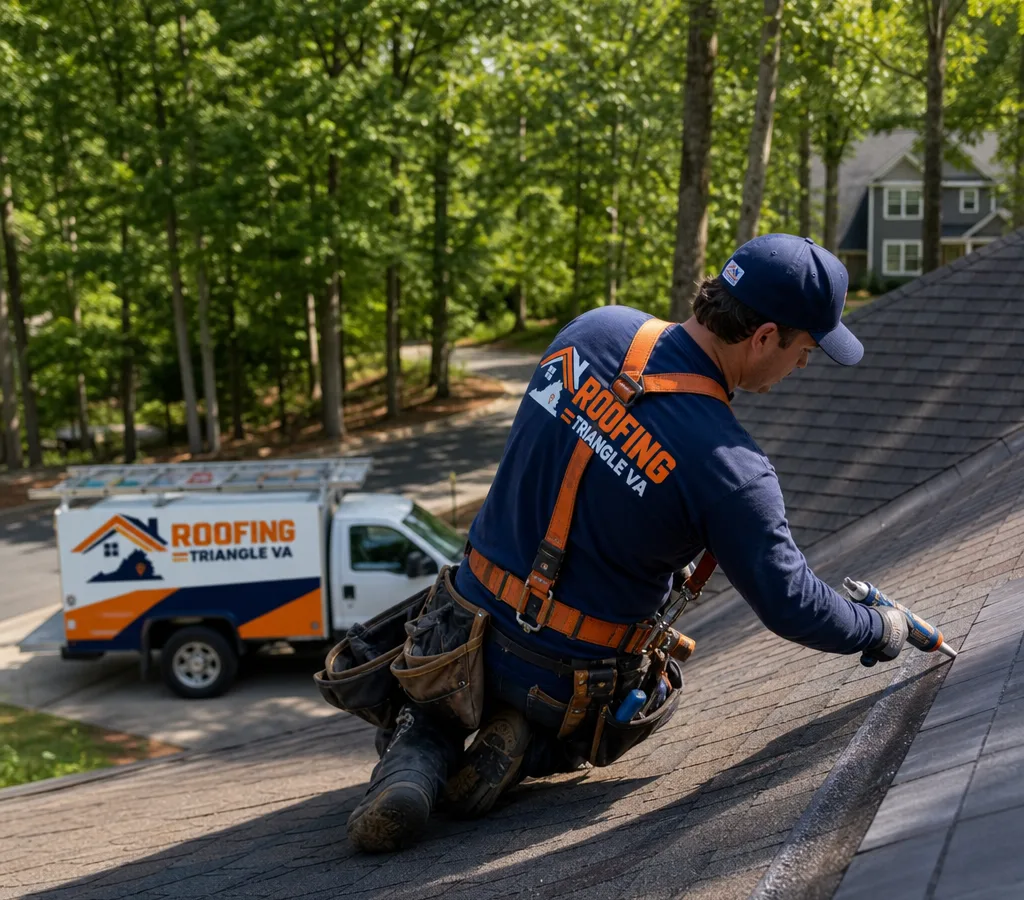
After the storm passes
Storm damage roof repair in Triangle, VA means stopping water first, then finding every place the storm hurt the roof and repairing it properly. Wind, hail, and fallen limbs rarely damage just the spot you can see, so a full assessment matters as much as the fix.
As a Prince William County roofing contractor, we see the same storm patterns every year: summer thunderstorms with straight-line winds, the remnants of tropical systems in late summer and fall, and winter nor'easters that drive rain sideways into flashing.
Homes near the Potomac and Quantico Creek take more exposed wind, while older neighborhoods with tall oaks and tulip poplars see more limb damage. Both leave damage that is easy to miss until the next heavy rain finds it.
Types of storm damage
Strong gusts can lift shingles until the seal strip breaks and the shingle creases. Even if it lies back down, a creased shingle no longer resists wind and needs replacing.
Once shingles blow off, the underlayment underneath is the only barrier left, and it is not designed to stay exposed to sun and rain for long.
Hail can knock granules loose and bruise the mat beneath, which shortens shingle life even when the roof does not leak right away.
A heavy limb can crack decking or punch straight through it. We clear the debris, check the decking and rafters below, and rebuild the damaged section.
Ridge caps and flashing sit in the most exposed spots on the roof, so they are often the first details to loosen in high wind.
Flying debris and hail dent vent caps, split pipe boots, and pull gutters away from the fascia, opening paths for water at the roof edge.
Check from the ground
Never climb onto a wet or storm-damaged roof. Most of the warning signs can be checked from the yard or from inside the house:
If the damage turns out to be spread across several slopes, patching it one area at a time can cost more than it saves, and replacing the full roof system becomes the better long-term choice.
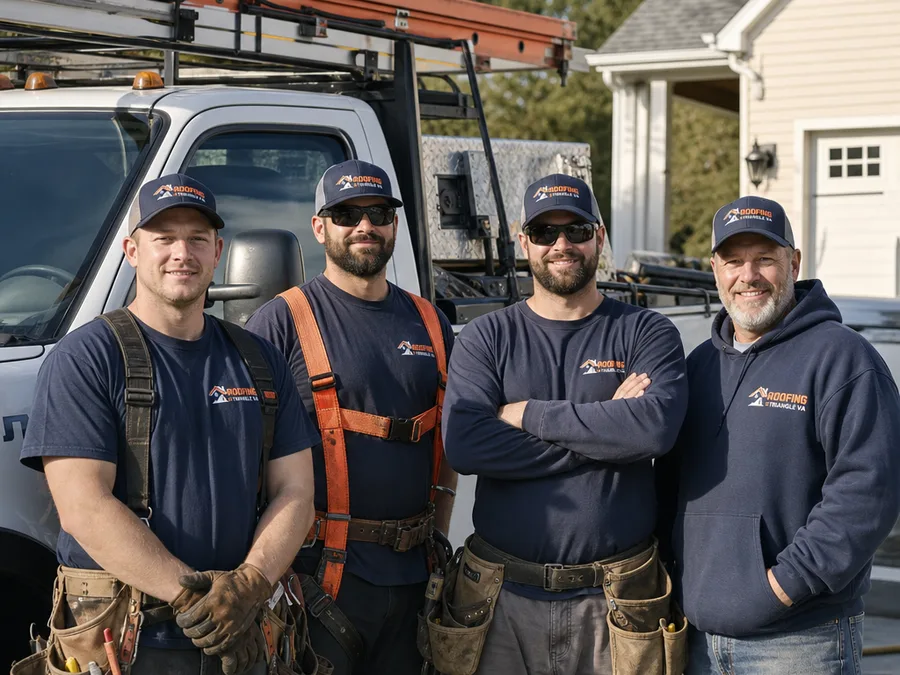
Let us know when the storm hit, what you can see from the ground, and whether water is coming inside. That helps us decide what to bring and what comes first.
If the roof is open, we cover it with a heavy tarp run over the ridge and held down with wood battens, so water cannot run underneath it.
We check every slope, not just the obvious spot. Wind damage often concentrates on the slopes facing the storm, while hail marks show up best on soft metal.
You get photos of each damaged area and a written list of the repairs needed, so you know exactly what the work covers.
We replace creased, cracked, and missing shingles and reset loosened flashing, matching the existing shingles as closely as current products allow.
We clear storm debris from the roof and gutters, run a magnet across the work area, and walk you through the finished repair.
Budgeting for storm repairs
Storm damage roof repairs in Triangle typically cost $400 to $3,000, depending on how many shingles, ridge caps, and flashing sections need replacing. An emergency tarp to protect an open roof usually runs $300 to $1,200, based on the size of the opening, the pitch, and how quickly it is needed.
Exact pricing follows the assessment and a written scope. This is how common storm damage usually gets fixed:
| Damage | Usual fix | What raises the cost |
|---|---|---|
| Creased or lifted shingles | Replace the affected shingles and restore the seal pattern. | Damage spread across several slopes. |
| Missing shingles | Install new shingles over sound underlayment. | Underlayment soaked or torn underneath. |
| Hail bruising | Replace bruised shingles and damaged vent caps. | Older, brittle shingles that crack when lifted. |
| Limb impact | Clear debris, rebuild decking, and reshingle the area. | Cracked rafters or a large puncture. |
| Loose ridge caps or flashing | Reset or replace the cap and flashing pieces. | Chimney or sidewall flashing that needs rebuilding. |
| Open roof before repairs | Emergency tarp over the ridge, secured with battens. | Steep pitch, two-story height, or a large opening. |
What storms leave behind
A creased shingle is a damaged shingle, even after it settles back flat. The broken seal means the next strong gust can lift it again.
Wind damage that hides
Hail leaves its clearest marks on soft metal. Dented gutters, vent caps, and air conditioner fins are often the first clue the shingles were hit too.
Where hail shows first
Storm questions
No. Wet shingles are slippery, damaged decking can give way, and fallen limbs or loose debris can shift underfoot. Check from the ground or from a window, and leave the roof itself to someone with fall protection.
Look for dark spots where granules have been knocked away, soft bruises that feel spongy, and cracks in the shingle surface. Dents in gutters and vent caps on the same side of the house are a strong sign the roof was hit.
Shingles that look lifted, out of line, or creased across the tab are the main signs, along with missing ridge caps and shingle pieces in the yard. A broken seal may not leak right away, but it leaves the roof exposed to the next storm.
Stay clear of the area, and if any power lines are involved, keep away and report them to your electric utility, which is Dominion Energy or NOVEC in most of the county. Once the area is safe, call us to cover the opening and assess the damage.
A tarp is a short-term measure. Sun and wind break it down over a few weeks to a few months, so the goal is always to make the permanent repair as soon as the weather and materials allow.
They can, especially on homes that have been hit by hail before or sit in open, exposed spots. Shingles with a Class 4 impact rating resist hail better than standard shingles and are worth pricing out whenever storm damage means replacing a large area.
A storm can break shingle seals without taking a single shingle off. If a strong front just came through, get the roof assessed before the next one does.
Book Your Free InspectionProtect the roof first
Tell us when the storm hit, what you can see, and whether water is getting inside. We will cover anything open and follow up with photos and a written repair scope.