
Buying or selling a home
Virginia's property disclosure rules leave most of the job of finding defects to the buyer. A dedicated roof inspection gives you far more detail than the few minutes a general home inspector spends on the roof.
Serving Triangle, Virginia & surrounding areas
Mon–Fri 8am–6pm · Sat 9am–2pm
Roof inspection service · Triangle, VA
Find out what your roof actually needs before you spend money on it, with photos of every problem area and a written summary in plain language.
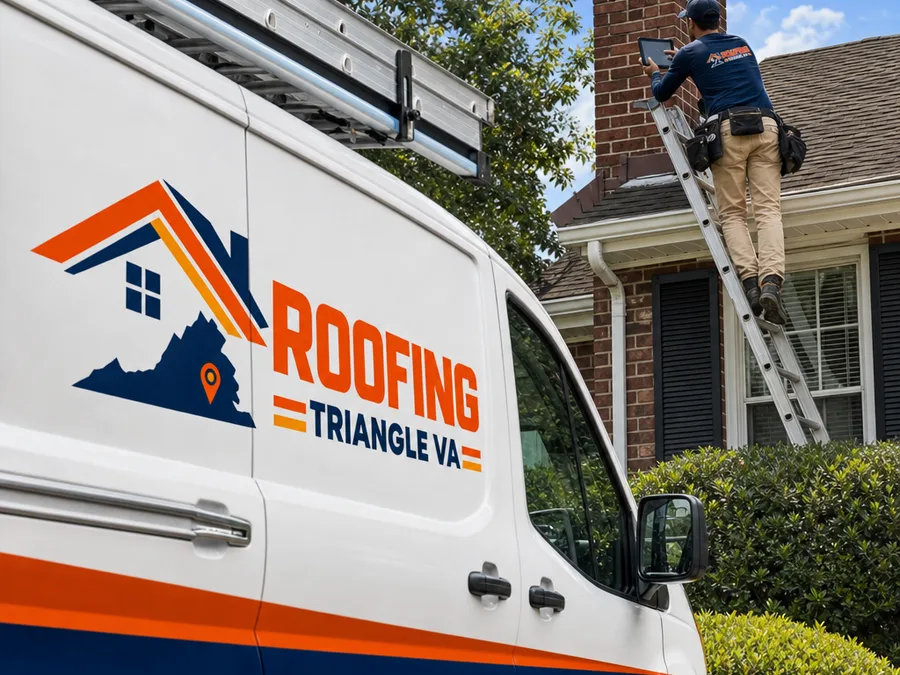
Know before you spend
A roof inspection in Triangle, VA is a close, hands-on check of your shingles, flashing, vents, gutters, and attic, followed by photos and a written summary of what we found. It tells you whether the roof is sound, needs a specific fix, or is close to the end of its life, before you commit to any work.
As a residential roofer headquartered in Triangle, we inspect homes across the 22172 area and the rest of Prince William County, from older ramblers near Route 1 to newer two-story homes in Montclair.
Most problems we find are invisible from the driveway: a cracked pipe boot, a seal strip that let go in last summer's wind, or step flashing that was never tucked under the siding. Catching those early is usually the least expensive roofing work you will ever pay for.
When to book
Virginia's property disclosure rules leave most of the job of finding defects to the buyer. A dedicated roof inspection gives you far more detail than the few minutes a general home inspector spends on the roof.
Summer thunderstorms and the remnants of tropical systems bring wind that can break shingle seals without tearing anything off. An inspection confirms whether the roof came through intact.
Many shingle roofs start showing wear around this age: granule loss, curling edges, and brittle tabs. A check at that point helps you plan ahead instead of reacting to a leak.
Inspecting the roof and the attic together lets us follow the water path from the stain inside back to where water is getting in outside.
Panels are expensive to remove and reinstall. If the roof under them has only a few years left, it is better to know that before the racking is bolted down.
A spring or fall inspection catches small failures, like a lifted shingle or a cracked boot, while they are still quick and inexpensive to fix.
What we examine
A useful inspection looks at the whole roof system, not just the shingles. These are the areas where we spend the most time, because they are where roofs in this area fail first:
If the inspection turns up one isolated problem, such as a single cracked boot or a lifted flashing line, the usual next step is a targeted roof repair rather than anything larger.
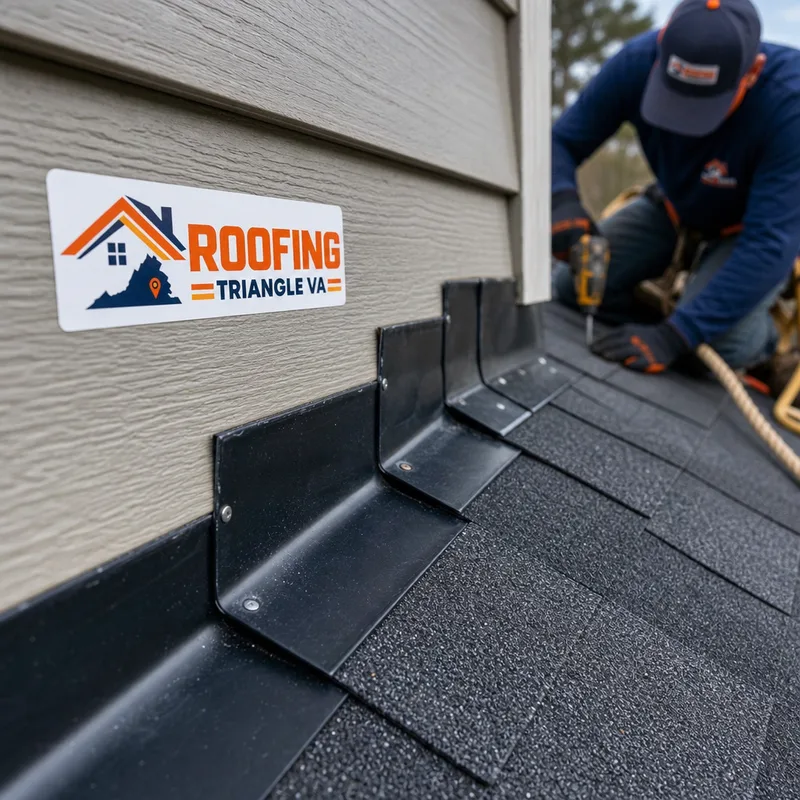
We start from the yard, looking for sagging rooflines, stained fascia, damaged gutters, and granules collecting at the downspouts.
Where it is safe to walk, we check the shingles slope by slope. On steep or fragile roofs we work from ladders at the edges instead, so the inspection itself does not cause damage.
Every chimney, skylight, sidewall, valley, vent, and pipe boot gets a close look, since these transitions cause most leaks.
If the attic is accessible, we look for damp insulation, water staining, daylight through the decking, and signs of poor ventilation.
You see the same problem areas we saw, photographed up close, so nothing rests on our word alone.
We sort the findings into what needs attention now, what can wait, and what simply needs watching, so you can plan and budget.
Inspection pricing
Across Northern Virginia, a standalone roof inspection typically costs $175 to $375 for a routine check, $200 to $500 when it involves tracing a leak, and $250 to $500 for a detailed report on a home being bought or sold. The inspection we do before quoting repair or replacement work is free.
Price differences come down mostly to the size and pitch of the roof, how many chimneys, skylights, and other penetrations it has, whether the attic can be reached, and how detailed the written report needs to be.
| Inspection type | Typical price | What it covers |
|---|---|---|
| Routine maintenance | $175 to $375 | Shingles, flashing, vents, gutters, and attic condition, with no specific problem prompting it. |
| Leak diagnosis | $200 to $500 | Tracing the water path from the interior stain back to the actual entry point on the roof. |
| Home sale or purchase | $250 to $500 | A detailed written report with photos to support negotiations and closing. |
| Before quoting work | Free | The inspection we complete before recommending a repair or replacement. |
What inspections teach us
Most leaks we trace start at a transition, not the middle of a slope: pipe boots, step flashing, chimney counterflashing, and valleys.
Where problems start
A roof can look perfect from the street and still have broken seals, cracked boots, or soft decking that only shows up when someone gets close.
Why we get on the roof
Inspection questions
Once a year is a good baseline, ideally in spring or fall, plus a check after any storm with strong wind or hail. Older roofs and homes surrounded by mature trees benefit from more frequent checks, because debris and age speed up wear.
Most inspections on a typical single-family home take about an hour, including the attic. Large or steep roofs with several chimneys, skylights, or roof levels can take longer.
Not for the exterior part. If you want the attic checked, someone needs to let us in, and it helps to clear a path to the attic access before we arrive.
It is worth it. Virginia's disclosure rules put most of the responsibility for finding defects on the buyer, and a general home inspection usually spends only a short time on the roof. A dedicated roof inspection gives you photos and specifics you can use before closing.
A lot. Water stains on the decking, damp or compressed insulation, daylight showing through, rusty nail tips, and frost on the underside of the roof in winter all point to leaks or ventilation problems that are invisible from outside.
Yes, and that is a common result. If the roof is in good shape, we tell you so, note anything worth watching, and suggest when to look at it again.
An hour on the roof now can tell you whether the next five years hold a small repair, a planned replacement, or nothing at all.
Book Your Free InspectionStart with the facts
Tell us why you want the roof checked, whether that is a home sale, a recent storm, a stain, or simply its age, and we will schedule a time to inspect it and walk you through the findings.